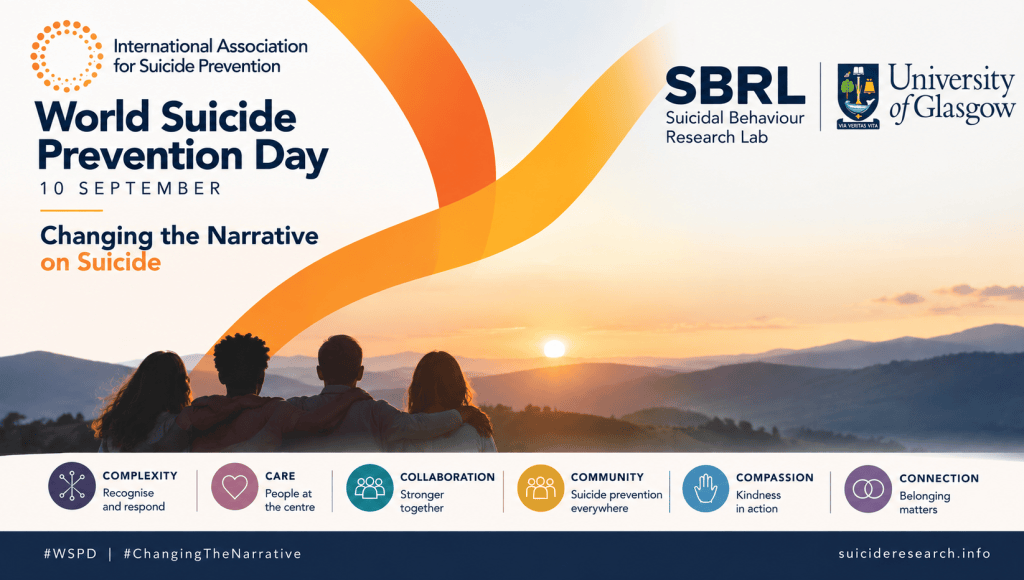
Today, 10th September, is World Suicide Prevention Day. It is a day to pause and reflect.
For some, it is a day of action and advocacy. For others, it is deeply personal: a day that brings into sharp focus someone they have loved and dearly miss, or their own struggle to stay alive. For many, it is both.
So, today, I want to acknowledge everyone who has been bereaved by suicide, and everyone living with the pain of suicidal thoughts or behaviour. I also want to acknowledge those supporting someone they love through their darkest moments. Behind every statistic are people, relationships, hopes, stories; and lost lives.
This year marks the final year of the International Association for Suicide Prevention’s three-year World Suicide Prevention Day theme, Changing the Narrative on Suicide.
That narrative needs to change urgently.
More than 720,000 people die by suicide globally each year. Yet suicide does not always receive the sustained political attention, investment and urgency that its devastating impact demands. Suicide prevention must be a global priority, not only on World Suicide Prevention Day, but every day.
Changing the narrative means moving away from silence, stigma and simplistic explanations. It means creating a world in which people can talk openly about suicide without fear of judgement; where asking for help is met with humanity and compassion; and where governments recognise suicide prevention as the public health priority it is.
It also means listening. Active listening.
Throughout my career, some of the most important lessons I have learned have come from people with lived and living experience of suicide: people who have attempted suicide, people who live with suicidal thoughts, people who have supported someone in crisis, and people who have been bereaved. And from my own lived experience of loss.
All these experiences remind us repeatedly that suicide is complex. There is rarely one cause and there will never be one solution. They remind us to be humble about what we know, to remain curious about what we do not know, and, above all, never to lose sight of the person behind our research, policies and services.
Recently, I described my 6Cs of suicide prevention research: Complexity, Care, Collaboration, Community, Compassion and Connection.
We need to recognise Complexity, while never allowing complexity to become an excuse for inaction.
We need better Care: timely, accessible, evidence-informed and centred on the needs of each person.
We need Collaboration, because no single profession, organisation, government or research discipline can prevent suicide alone.
We need Community, recognising that suicide prevention happens not only in clinics and hospitals but in schools, workplaces, families, neighbourhoods and everyday life. And that we are a community.
We need Compassion at the heart of everything we do; compassion for those struggling to stay alive, compassion for those who have attempted suicide, and compassion for families and friends who are carrying the pain of bereavement. We also need compassion for ourselves, for all of us working in suicide prevention.
And we need Connection. We know how profoundly painful it can be to feel disconnected, a burden, defeated by life and trapped by unbearable pain. Human connection cannot solve everything, but its importance should never be underestimated.
In the UK, this World Suicide Prevention Day also feels especially poignant following the desperately sad news that the youth suicide prevention charity PAPYRUS has entered administration. For many years, PAPYRUS and its dedicated staff and volunteers have been an important part of suicide prevention in the UK, supporting young people and families and campaigning tirelessly to save young lives. Its loss should really concern all of us. It is another reminder that suicide prevention requires sustained commitment, infrastructure and investment.
Ultimately, suicide is likely to touch all of our lives in some way, through family, friendship, colleagues, communities or our own experiences. That is a sobering thought, but it also reminds us that we can all play a role in suicide prevention, as it belongs to all of us.
We can start conversations. We can listen without judgement. We can challenge stigma where we see it. We can reach out when someone withdraws. We can advocate for better services, research and policy. Only through working together will be tackle the scourge of suicide.
Changing the narrative is not about pretending that hope is easy. For someone in unbearable psychological pain, hope can feel impossibly difficult to see. Perhaps we can help someone hold on to hope when they cannot hold on to it for themselves.
On this World Suicide Prevention Day, my thoughts are with everyone affected by suicide, especially those grieving and those struggling to stay alive today.
There is much more that we need to do. But there is also much that we can do.
Together, with compassion, connection and commitment, we can help make more lives feel liveable.
Rory O’Connor, Director, Suicidal Behaviour Research Lab
 Suicidal Behaviour Research Laboratory