by Dr John Gaal
Hello, my name is Dr John Gaal. I currently serve as the Director of Worker Wellness for the Missouri Works Initiative. This is the non-profit arm of the Missouri AFL-CIO (a federation of unions across the state in the Midwest section of the USA). I, like some readers, am a suicide loss survivor. We lost our son to suicide in 2017. I had the pleasure of meeting others working in suicide prevention last June, in Glasgow, at the 9th Suicide and Self-Harm Early and Mid-Career Researchers’ Forum (EMCRF). Hopefully, as a US citizen, the following will serve as a brief ‘ice-breaker’ for those who do not know me:
1) In spite of being placed on 4 years of probation in my 1st month of High School, it was my U.S. Department of Labor (US-DOL) apprenticeship in carpentry (post-secondary: 1979-82) that resonated with me by connecting theory in the classroom to practice in the shop. As such, this apprenticeship was the basis for my ongoing thirst for life-long learning and paved a way for me to use my new skills and knowledge to help others. Fun Fact: In Sep 1997, I had the honor of utilizing those talents by assisting in the setup of a U.S Agency for International Development (US-AID) funded construction trades apprenticeship school outside of Cairo, Egypt for local residents seeking a career in the construction industry.
2) Based on my Master’s degree thesis in 1992, by 2013, the St. Louis regional construction industry adopted a training model to recruit and retain non-traditional apprentices called the BUD (Building Union Diversity) program. In late 2016, the success of BUD provided a regional opportunity to pioneer a path for industries to embrace the ‘mental aspects’ of safety in the US construction industry: mental health, opioid addiction, and suicide crisis.
BUD celebrates 4 years of success
Addressing the Impact of Opioids in Construction
I wish to thank the Suicidal Behavior Research Lab (SBRL) staff for contacting me a few months ago inviting me to write a blog. To that end, I jumped at this opportunity to share my related experiences, which are summarized below along with some weblinks that I hope are helpful. So, why do I care about workplace well-being?
1) From a professional viewpoint, too many US blue-collar workers are experiencing stressors that have caused them to resort to maladaptive coping strategies. We need to discuss the importance of mental health safety in the workplace just as we did with regards to the physical aspects of safety over the past +25 years.
Dodge: State of Worker Wellness
2) From a personal standpoint, we lost our 24-year old son to suicide, in March 2017. John Jr. was an excellent High School football and soccer player who suffered multiple concussions in his Junior and Senior years. People need to know that a tragedy of this magnitude can happen to anyone—sometimes without notice. My goal is to help other parents become more proactive when it comes to their children’s mental health. And, in turn, make them more aware of those around them in their workplaces and communities.
Ballwin Dad Speaks on Losing His Son
In the spirit of becoming part of the solution vs remaining part of the problem, I will attempt to explain my approach to mental health promotion—which includes addressing the opioids and suicide crises—in the construction industry below:
1) We must find willing partners without barriers: You or I cannot do this
work alone
a. Examine the landscape: Not unlike the EU, the US has a dearth of mental health professionals and yet mental health issues are on the rise.
b. Make lemonade out of lemons: In light of the aforementioned shortage of mental health professionals, we should train more peer specialists to assist in providing Psychological First Aid to those workers in need of immediate help. Examples include: Laborers Escaping Adversity Now-St. Louis (LEAN-STL) and STL Building Trades Wellness Coalition
How LEAN-STL Peers Help Construction Laborers Fight Addiction
St Louis Building Trades Create a Wellness Coalition
2) We must be brave pioneers: In other words, tackle the tough / uncomfortable topics-
a. Build Community through Education: We need to do more work beyond the awareness phase. When we provide meaningful information, people tend to act.
Tri-lateral Partnership Offer Insights on Suicide Prevention
b. Find SMEs (subject matter experts) who can connect and deliver the message: Deliver your message by utilizing speakers with credibility.
Professor Sheds Light on Gambling Addiction in Construction
c. Collaborate with industry partners: Recruit insurance providers, law firms, etc. to assist with the cause.
By now, some of you may be asking yourself, what does this have to do with SBRL’s work? To make a long story short, in the third quarter of 2024 (Q3-2024), I took 8 suicide calls over the course of those 12 weeks. To be clear, none of those callers asked me what to do 3 weeks, 3 months, or 3 years from the time of their calls. ALL asked me what do I do right now! This was the impetus for me to take action by beginning a pilot study on suicide postvention in the US construction industry—with a focus on the first 48 hours after the incident. In this mixed-methods approach, I surveyed and interviewed nearly 80 people, across 5 countries, directly and indirectly related to the issue of suicide in the workplace. During this 2 year journey, I have had the honor and pleasure of connecting with brilliant researchers (many with lived experience) in Canada, England, Scotland, Australia, and the USA. As I near the completion of preparing an article for a peer-reviewed journal, I wish to briefly share findings with respect to my 3 key research questions:
1) Should the US construction industry address the aftermath of suicides?
Survey Responses (n=64): 95% of the respondents indicated that the US construction industry had an opportunity to act.
Interview Responses (n=15): 100% of the interviewees indicated that the industry must take action.
2) Is there a need for a postvention program that focuses on the acute phase?
Survey Responses: 77% of the respondents indicated that the US construction industry needed to focus on the short term.
Interview Responses: 73% of the interviewees indicated that the emphasis should be placed on the 0-24 hour timeframe.
KCA Wellness Chat: Inside the Mind
3) If so, might a peer support model serve this need?
Survey Responses: 81% of the respondents indicated that the US construction industry should utilize Peer Supporters.
Interview Responses: 47% of the interviewees indicated that Peer Supporters have shared experience and understanding.
Based on feedback from the Focus Group stage of this study, I am in talks with no less than 3 trusted sources to assist in the design, development, and dissemination of related training materials (in-person and virtually) that I hope will address the acute phase of suicide postvention in the US construction industry. My goal is to implement trainings and videos by Jan 1, 2027.
In closing, my call to action is that based on my recent research, in order for us to make progress in reducing the suicide rate, we must connect the three legs of the suicide triangle: Prevention,
Intervention, and Postvention. If we continue to approach these 3 aspects of the ‘triangle’ in siloes, we will continue to get the same results. Make no mistake, Postvention is Prevention!
Finally, I cannot stop thinking about the closure of my Teams meeting with Prof Rory O’Connor a couple of months ago. Our discussion centered on ‘what to do’ and ‘what not to do’ going forward as I pursue developing a related training program addressing Postvention. Herein, his last words were a check-in with me, to ensure I was taking time to address my own needs. Accordingly, I offer these tips for your journey:
1) Make time EACH day for self-care
Start slow…Step back and take a breath
2) Practice the 3 Bs
Be kind
Be honest
Be grateful
Thank you!
Dr John Gaal
Dr. John S. Gaal
CPS, CWP, CHW-C, LAP-C
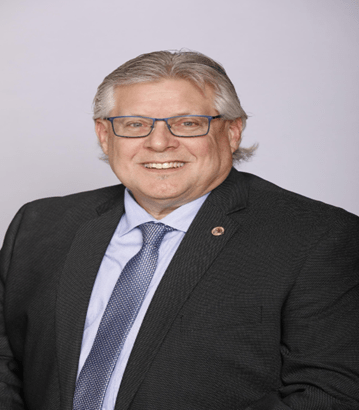
In March 2021, Dr. Gaal accepted the newly created position of director for the MO AFL-CIO’s Missouri Works Initiative’s Worker Wellness Program. (At the end of January 2019, after 40 years of service, John retired as the Director of Training and Workforce Development for the St. Louis-Kansas City Carpenters Regional Council.) As a labor representative, he continues to serve as the Postvention Committee Co-chair of the Missouri Suicide Prevention Network, as a member of the International Foundation of Employee Benefit Plan’s Mental Health Expert Panel, and recently finished a 6-year term on IVETA’s Executive Committee. John completed a union apprenticeship in carpentry over 40 years ago and has since earned an associate’s degree in construction management, a bachelor’s degree in architecture, master’s degree in international business, and a doctorate in organizational leadership. In addition, he completed post-doctoral projects at Harvard University (Trade Union Leadership: 2009) and University of Florida (Marketing & Management: 2014). John was honored with two Fulbright (Specialist) Scholarships in Labor and Industrial Relations (Tokyo, Japan: 2010 and Toronto, Canada: 2015). He has published numerous articles in peer-reviewed and professional journals on issues related to various aspects of workforce development and worker wellness. Since 2018, John has completed a variety of mental health certifications and in Q4-2023 earned his Labor Assistance Professional certification. Dr. Gaal has been married for 41 years, has four children, and is in his 30th year as an adjunct professor at Webster University.
 Suicidal Behaviour Research Laboratory
You must be logged in to post a comment.