
Event Description
The Suicidal Behaviour Research Laboratory (SBRL) is delighted to announce the 10th suicide and Self-Harm Early and Mid-Career Researchers’ Forum (EMCRF26), which will be held at the Glasgow Grosvenor Hotel, on 11th and 12th June 2026. This year will be the EMCRF’s 10th anniversary and to mark the 10th anniversary of the Forum, it will be two full days.
EMCRF26 is open to all working in the field of suicide and self-harm research, but it is specifically targeted at Early and Mid-Career Researchers. It will provide a space for support, networking, and collaborations among Masters, PhD, and Post-doctoral research students as well as more established researchers.
The EMCR Forum will yield opportunities for investigators at an early stage of their career to receive the advice and guidance of more senior scientists in the field and create a supportive context for EMCRs to share their experiences and discuss the challenges faced in suicide and self-harm research, as well as fostering potential future research collaborations. The Forum also provides the opportunity to present your latest research and study projects in progress to colleagues, peers, health professionals, and policy makers. In short, if you are a researcher (at any stage of your career) in the field of suicide and self-harm please consider attending and/or presenting.
We are looking forward to welcoming you to Glasgow.
The Suicidal Behaviour Research Lab Team
Invited Speakers
Professor Amy Brausch

Dr. Amy Brausch is a Professor in the Department of Psychological Sciences at Western Kentucky University, an Adjunct Assistant Professor at the University of Kentucky College of Medicine, and a Licensed Clinical Psychologist. She earned her PhD in Clinical Psychology from Northern Illinois University and has worked with issues of suicide and self-injury in both her clinical work and research program. Dr. Brausch’s clinical experiences have included community mental health, public schools, university counseling centers, and private practice.
She has published numerous articles and book chapters related to suicide and self-injury risk and protective factors in adolescents and young adults. She is an Associate Editor for Suicide and Life-Threatening Behavior, and on the editorial boards for the Journal of Youth and Adolescence and Archives of Suicide Research. She has been a Consultant with CAMS-Care for 10 years and provides training and consultation to clinicians across the United States and abroad in the Collaborative Assessment and Management of Suicidality treatment framework.
Dr. Brausch’s research has been funded by the National Institute of Mental Health, the Kentucky IDeA Network of Biomedical Research Excellence, the Kentucky Justice and Public Safety Cabinet, and the American Foundation for Suicide Prevention.
Dr Eve Griffin

Dr Eve Griffin is Chief Executive Officer at the National Suicide Research Foundation and Adjunct Professor with the School of Public Health, University College Cork. Eve is also co-lead of the WHO Collaborating Centre for Surveillance and Research in Suicide Prevention at the NSRF and the Irish national representative for the International Association for Suicide Prevention. She has a strong track record of collaborating with partners representing policy, service provision, clinical practice and lived experience. Her research interests include supporting people bereaved by suicide, surveillance of suicidal behaviour and programme evaluation. She is a member of the Expert Advisory Group for Ireland’s next Suicide Reduction Strategy.
Professor Matt Spittal
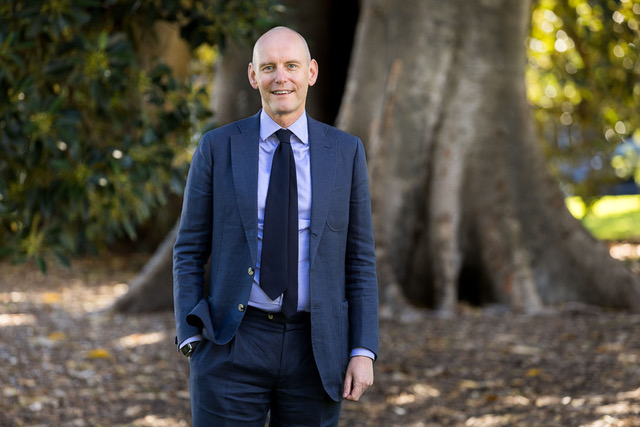
Matthew Spittal is professor of epidemiology and biostatistics at the University of Melbourne. As a biostatistician by training, Matthew contributes rigorous methodological expertise to suicide prevention studies and to broader studies of mental health. He founded and leads the Mental Health Epidemiology Unit, a unit located within his centre specialising in the design and analysis of studies in mental health. He has led major international studies on risk prediction and suicide, the role of the media and suicide and Covid-19 and suicide. He’s a keen runner, but is aware he’s unlikely to achieve any new personal bests
Dr Paul Corcoran
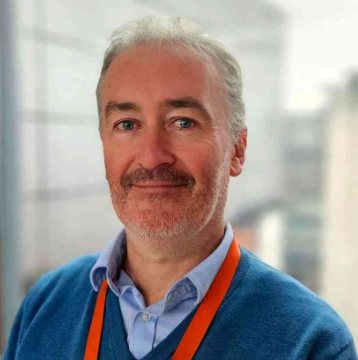
Dr Paul Corcoran has worked with the NSRF since it was established in 1994. Paul’s current role with the NSRF is Head of Research. Paul’s degrees include a BSc. in Statistics and Computer Science, a Master’s degree in Statistics and a PhD. in Epidemiology, all obtained at UCC. He has more than 200 peer-reviewed scientific publications and has contributed chapters to international texts on the epidemiology of suicidal behaviour. He was a member of the writing group of “Reach Out”, Ireland’s National Strategy for Action on Suicide Prevention. In addition to his role with the NSRF, Paul is also a Senior Lecturer in Perinatal Epidemiology with the National Perinatal Epidemiology Centre, based in the Department of Obstetrics and Gynecology, and with the School of Public Health, UCC.
Professor Pooja Saini

Professor Pooja Saini is a leading Chartered Psychologist and Professor of Suicide and Self‑Harm Prevention at Liverpool John Moores University. Her research spans school-based, community, and primary care interventions across diverse populations. She leads innovative research including the MAPSS—Multimodal Approach to Preventing Suicide in Schools and COPESS—Community Outpatient Psychotherapy Engagement Service for Self‑harm trials in England. A committed public engagement advocate, Professor Saini collaborates with NHS Trusts, Public Health and major mental health charities—including James’ Place, PAPYRUS, Martin Gallier Project and Alfie’s Squad —and serves on national/regional suicide prevention and postvention task groups. Prof Saini co-chairs the International Association for Suicide Prevention’s Primary Care Special Interest Group and is a member of the European Society for Prevention Research. In addition to her academic leadership, she co-produces the Let’s Talk Hope podcast series and leads the #HopeShow campaign—driving systemic change to foster resilience and hope nationwide.
Registration
Registration cost: £100*
*Although SBRL subsidises the Forum to keep the cost as low and as accessible as possible, as the Forum is two full days this year and is hosted in a local hotel, we have had to increase the registration fee to £100 for the two days (which includes lunches on both days as well as everything else).
Registration deadline: Friday 1st May 2026.
Please click here to begin registration.
Payment options: Credit/debit Card.
Refund policy: Refunding requests will only be accepted until Monday 11th May.
Please note: Conference dinner is not included in the cost of registration.
If you have any questions about registration then please email: emcrf@glasgow.ac.uk
Conference Workshops
Conference workshops will take place on the morning of day 1 of the conference (Thursday 11th June) and are included within the registration fee. Please book your place when registering. As these are parallel workshops you will only be able to sign up to one workshop.
Workshop 1: (Professor Amy Brausch): The Collaborative Assessment and Management of Suicidality (CAMS): An evidence-based framework for assessment, treatment, and management of suicide risk
Workshop 2: (Dr Paul Corcoran & Dr Eve Griffin): Considerations when evaluating suicide prevention strategies
Dinner*
The conference dinner will be on Thursday 11th June at 7.30pm at La Vita Spuntinis, 199 Byres Road which is a short walk from the conference venue. You will be able to note your interest in attending the dinner during registration and pay for your dinner ticket when you attend the registration desk on day 1 of the conference.
The dinner cost will not be included in the registration fee and you will be required to pay £25 if you wish to attend the dinner.
Location
We are excited to announce that the 10th Suicide & Self-harm EMCR’s Forum will be held in-person at the Glasgow Grosvenor Hotel.
This location is in the heart of Glasgow’s West End with transport links from Hillhead Subway Station to the City Centre (Glasgow Buchanan Street or St Enoch) via Glasgow Subway.
Call for Submissions (adapted from BPS guidelines)
Presentations will be in the format of a brief 10-minute oral presentation or a poster. Authors can present complete studies or work in progress. This latter type of presentation allows researchers to provide information about, and share their reflections on, work in progress. For all types of presentations, the abstract should have clear and explicit aims and objectives, hypotheses or research questions; methods should be clearly described, with an explicit statement of intended sample characteristics and justification for this; a clear plan of analysis should be outlined, which should make clear how the intended analyses will address the research aims or research question; and the discussion section should clarify the expected or potential implications of the research. Please see below for guidance on writing your abstract:
For completed work:
Background: State the primary objectives of the study, including the main research questions, aims or theory being tested.
Methods: Quantitative studies should include design, participants, measures and analyses; qualitative studies should include design, participants, methods of data collection and analysis, e.g. thematic analysis, discourse analysis, interpretative phenomenological analysis.
Findings: Quantitative studies should include a summary of the results (accompanied by important statistical information); qualitative studies should include a description of the main findings such as the themes or categories generated.
Discussion: Conclusions and/or some discussion of the possible contribution to, or implications for, psychology and other relevant contexts related to self-harm or suicide.
For work in progress:
Background: State the primary objectives of the study, including the main research questions, aims or theory being tested.
Methods: Quantitative studies should include design, participants, measures and analyses; qualitative studies should include design, participants, methods of data collection and analysis, e.g. thematic analysis, discourse analysis, interpretative phenomenological analysis.
Expected results: Describe the preliminary or expected results. Current stage of work: Describe the stage you are at with regard to the planned work.
Discussion: Some discussion of the possible contribution to, or implications for, the field of self-harm or suicide research.
If you choose to present a poster then vertical A0 or A1 best fit the boards.
Abstract Submissions:
- Abstract submissions will be via an online system: Abstract submissions are now closed
- Closing date for abstract submission is: Friday 27th March 2026
- Questions should be sent to the SBRL team at: emcrf@glasgow.ac.uk.
Important Dates:
Abstract submission deadline: Friday 27th March 2026
Abstract acceptance: Friday 10th April 2026
Registration deadline: Friday 1st May 2026
We look forward to welcoming you to Glasgow!

 Suicidal Behaviour Research Laboratory
You must be logged in to post a comment.